
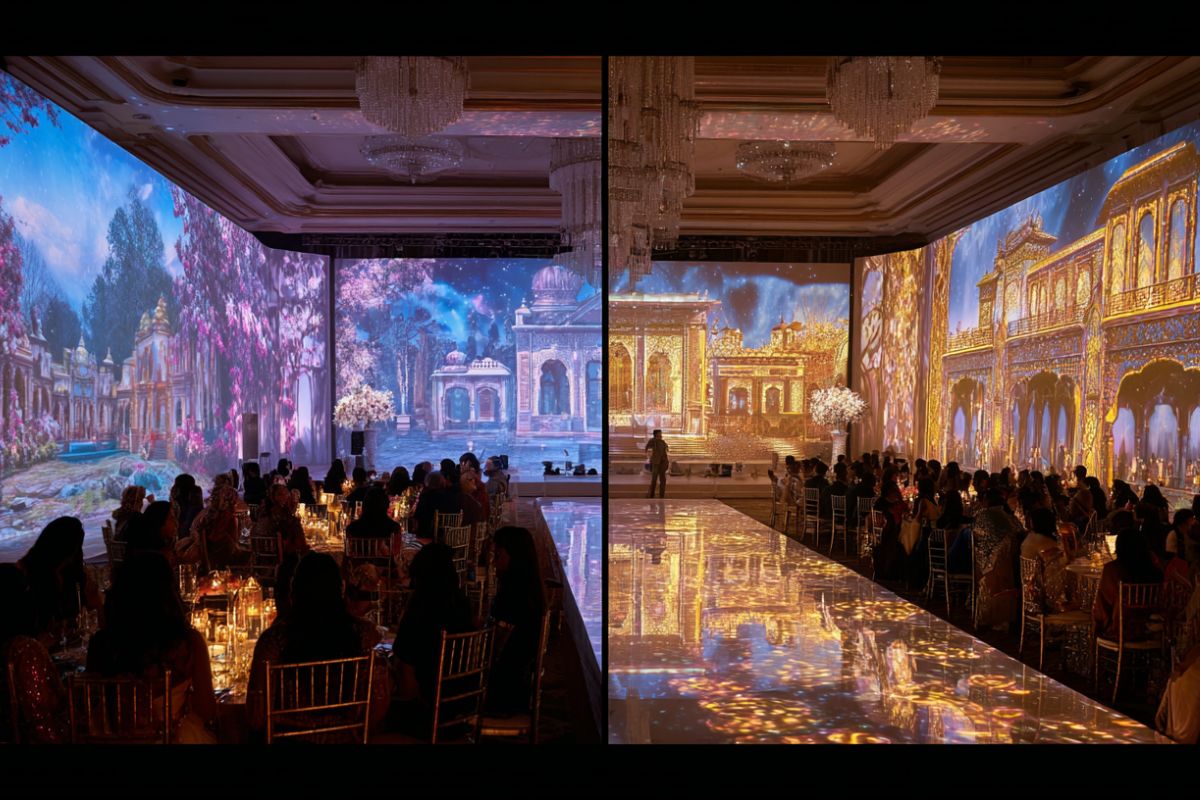
LED Wall vs Projection Mapping: Which is Better for Weddings in 2026?
These days, creating a complete visual experience is more important for weddings than just decor. Technology greatly impacts the appearance and mood of events, from grand entrances to stage backdrops. The theory over LED wall vs projection mapping becomes important at this point.
Although they operate quite differently, both solutions have the power to completely change a space. While projection mapping, for example, utilizes light to convert areas into interactive displays, LED walls provide vivid, high-quality visuals. Selecting the best one has an impact on visibility level, price, and general effect in terms of look.
This guide compares LED screens and projectors for weddings in a simple to operate manner, making it easier to figure out which is best in various wedding setups.
What is an LED Wall in Weddings?
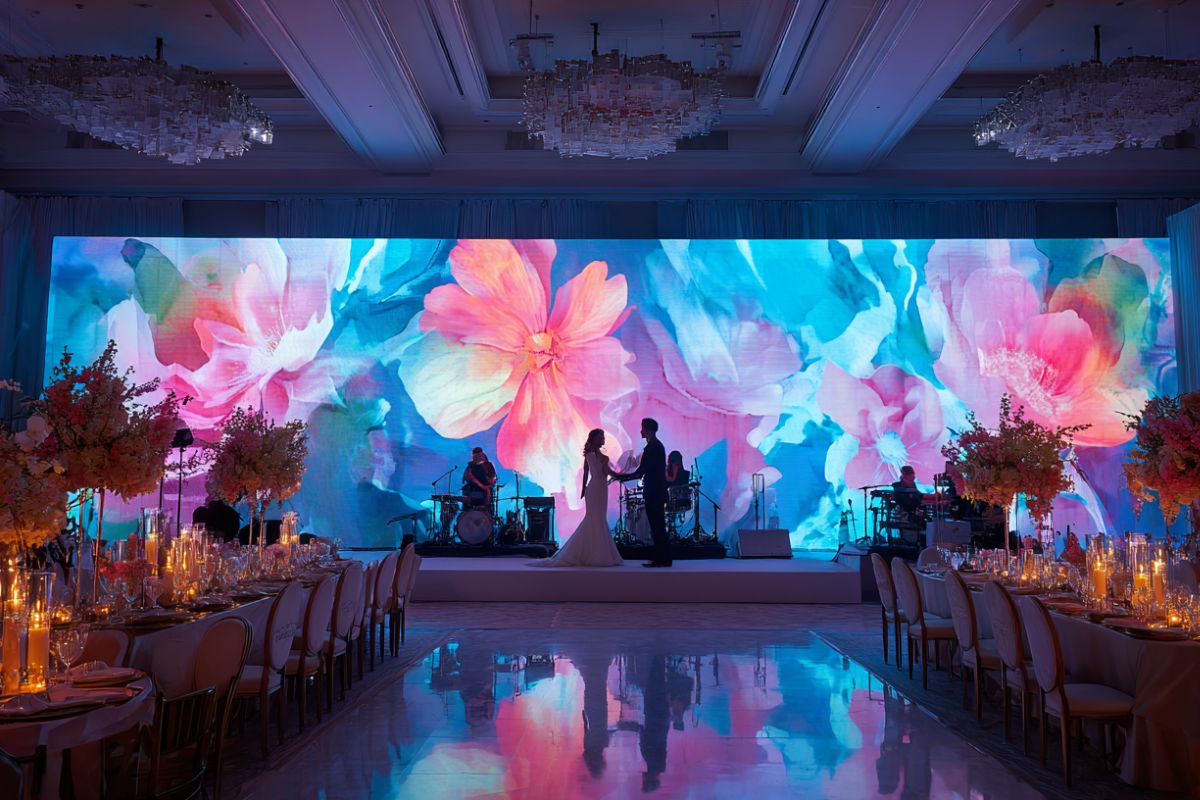
An LED wall is a sizable display made up of several LED panels which are connected to form a single, smooth screen. High-quality images, such as animated themes, couple names, and event-specific graphic elements, are displayed in vivid, exact detail at wedding ceremonies.
LED walls stand out for their uniformity and clarity in the LED wall vs projection mapping discussion. They are reliable for indoor as well as outdoor events because they are without regard to surface quality and lighting. The images stay clear and colorful everywhere, whether it’s a mandap, backdrop, reception stage, or entry setup.
LED walls provide greater brightness and improved visibility when compared to projectors for weddings, particularly for large venues or evening events where impact is crucial.
What is Projection Mapping in Weddings?
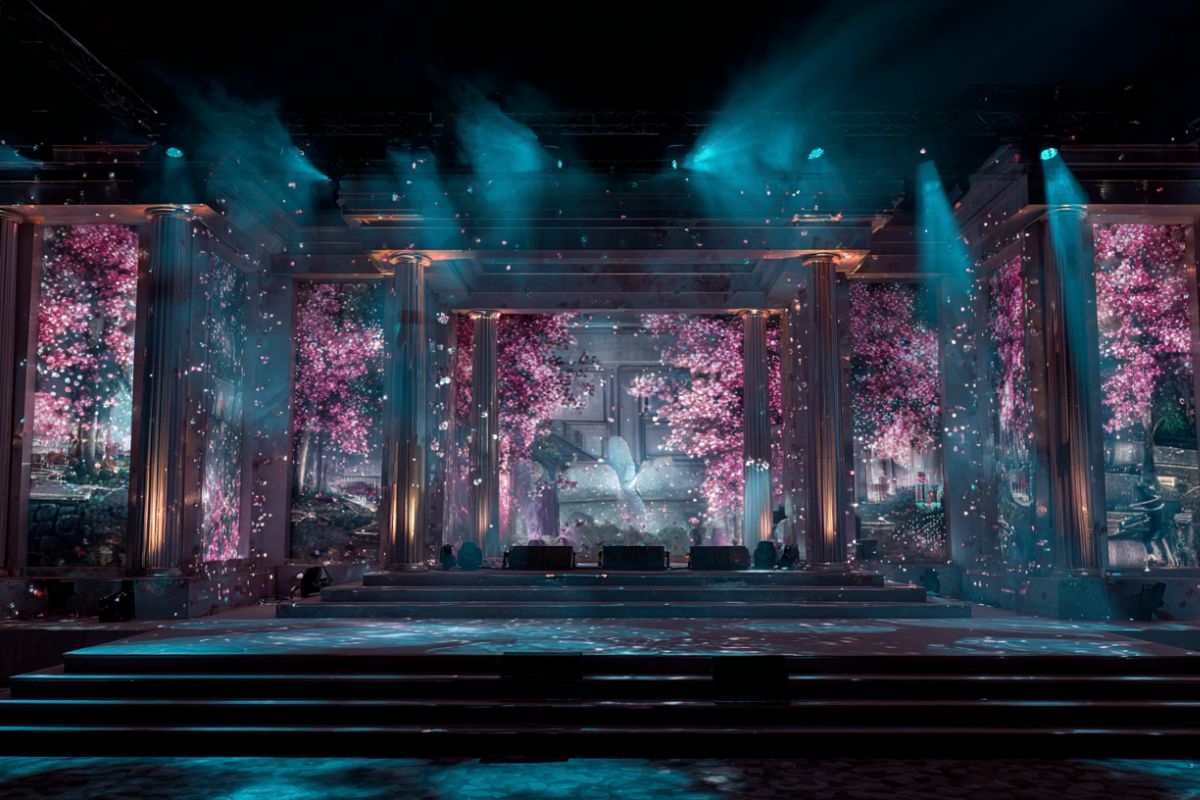
Using a visual technique called projection mapping, scenes and layouts are projected on surfaces such as walls, a theaters, or custom structures. It makes flat or plain areas come to life with light and motion by turning existing elements into dynamic images in place of a screen.
When compared to LED wall vs projection mapping , projection mapping, an appears more creative and interactive. It can create traveling patterns throughout décor components or transform a plain background into a palace appearance. However for it to appear at its best, surface condition and proper illumination are essential.
When comparing wedding LED screens and projectors, standard projection mapping is most efficient in controlled settings, primarily indoor spaces or dark areas where images can be seen vividly and clear.
LED Wall vs Projection Mapping: Key Differences
The process of creating visuals is where LED wall vs projection mapping varies. An LED wall is a direct display that uses emitted light panels to clearly display content. Conversely, projection mapping projects light onto a surface, so the end result depends on both the lighting around it and the surface itself.
One important factor is light. While projection mapping typically works best in dark areas, LED walls stay vibrant even in natural light or dark spaces. In Indian weddings, where lighting settings differ on the event, this has a significant impact.
In addition, the configuration differs. While projection mapping requires exact alignment, appropriate surfaces, and controlled conditions to look acceptable, LED walls are simple to use setups with reliable output levels.
Both allow for artistic visuals in terms of freedom, but LED walls deliver consistently better results across venues. LED walls are typically more trustworthy than projectors for wedding ceremonies, but traditional projection mapping is more creative and adaptable to the surroundings.
LED Wall Benefits and Drawbacks (Easy to Understand)
LED walls are known for their solid performance and trustworthy output when compared a LED wall vs projection based mapping..
Advantages of LED Walls
- Even during the day, the images are very clear and bright.
- Suitable for both outdoor and indoor marriages
- No dependence on the quality of the wall or surface
- Simple to assemble and manage during events
- Ideal for large backdrops, stages, and mandaps
Drawbacks of LED Walls
- For large setups, it may be a little pricey.
- Less “mixed” with décor, more similar to a digital screen
- Setting up requires the right amount of space and a standard structure.
When trustworthy quality and clear vision are the most essential criteria, LED walls are the safer option when compared to wedding LED screens and projectors.
Projection Mapping Benefits and Drawbacks
When comparing LED wall vs projection mapping, projection mapping highlights artistic visuals and imagination more.
Benefits of Mapping Projections
- Gives walls and décor an unique, complete appearance.
- Rather than showing like a screen, it blends in perfectly with the room.
- Excellent for theme-based imagery and narratives
- Able to make basic structures attractive
Drawbacks of Mapping Projections
- To appear clear, a dark atmosphere is required.
- The color and surface of the the wall establish a quality.
- Not suitable for bright lights or outdoors.
- The setup requires exact match and is more delicate.
When comparing LED screens and projectors for weddings, LED walls can easily handle greater real-life scenarios, while traditional projection mapping performs most effectively when the location and lighting conditions are controlled.
Cost Comparison (India 2026)
Costs differ depending on setup size, location, and visual level when comparing LED wall vs projection mapping, but there are a few apparent patterns.
More compact LED wall setups, such as stage wall covering, usually run you between ₹50,000 and ₹1.5 lakh. According to screen size as well as quality, big luxury configurations can cost up to ₹8 lakh, while mid-sized wedding reception setups can cost between ₹2 lakh as well as ₹5 lakhs.
For simple setups, mapping of projections can at times begin at a slightly lower cost, between ₹40,000 and ₹1 lakh. However, the cost may quickly match or even surpass LED walls, reaching ₹3–7 lakh or more, as complexity increases (e.g., custom surfaces, multiple projectors, and detailed content).
While that compare LED screens and projectors used for weddings, LED walls provide consistent results and more reliable pricing. Although mapping of projections might at first seem to be cheaper, based on the location, configuration requirements and customizations can increase the cost.
When to Use LED Wall vs Projection Mapping
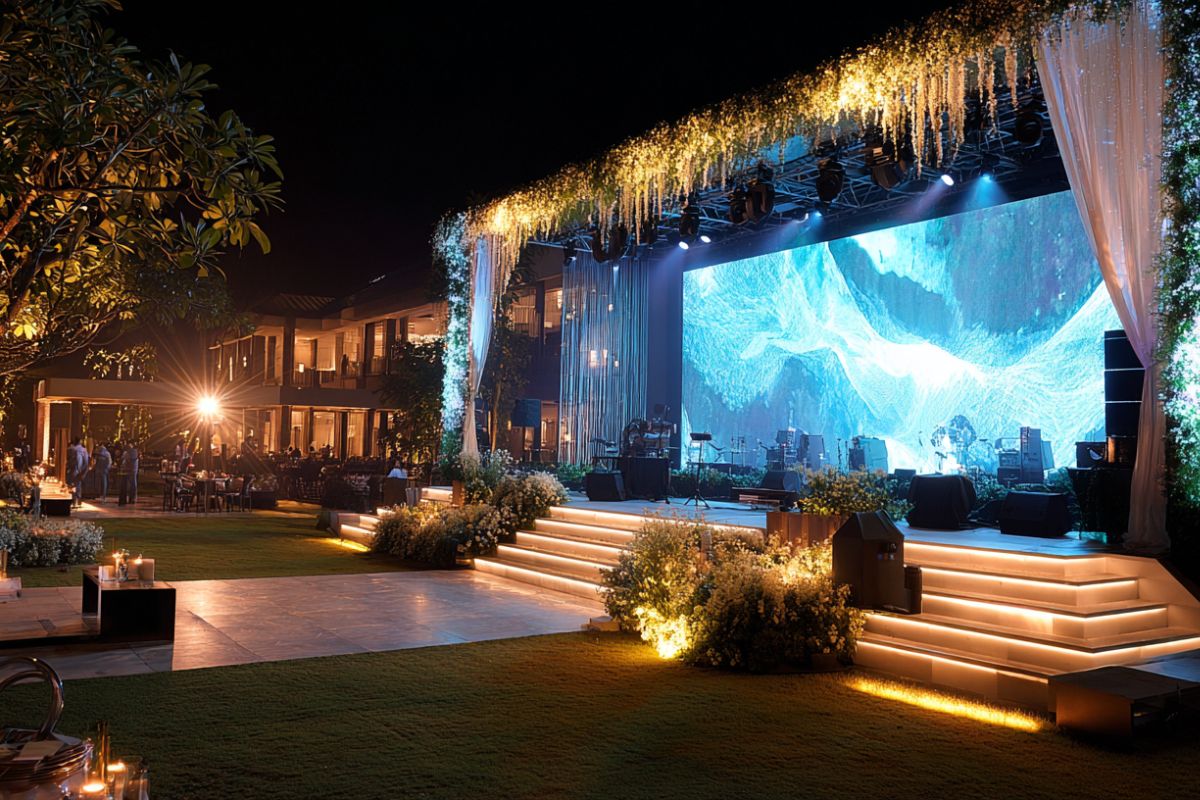
The type of event, venue, and general environment all play a role in the choice of LED wall vs projection mapping.
LED walls are best when high impact and clear vision are required. LCD screens guarantee that images stay vibrant and clear for big events, formal outdoor weddings, and vibrant venues. When uniformity is important, they are ideal for traditional mandap backdrops, sangeet shows, and wedding reception venues.
Indoor spaces with controlled illumination are better suited for projection maps. This performs well in creative designs that allow walls, structures, or décor objects to be transformed into beautiful images. It is perfect for cocktail events, festive events, and smaller venues where a calm, immersive atmosphere is preferred.
When choosing between an LED screen and a screen for a wedding, LED walls are usually more useful, but projection mapping is ideal when the environment allows for it and the primary focus is on visual design.
LED Wall vs Projector for Weddings: What Works Better?
When it comes to actual wedding setups, the decision between LED wall vs projection mapping is more cost-effective than technical. The primary query is simple: which will look good over the event?
LED walls work better in most scenarios. No matter the size of the venue or lighting, they remain uniform, vibrant, and transparent. Whether it’s a big the front desk or a casual event, the images are clear and visible to all guests.
When used for projection mapping, projectors can have an eye-catching appearance, but only under specific conditions. The output may appear dull or unclear if the lighting is random or the surface is rough. For crowded wedding events, this lowers its reliability.
When analyzing LED screens and projectors used for weddings, LED walls are typically a better option for reliable results, while projectors used are better suited for specific artistic settings where the surroundings is fully controlled.
Final Recommendation (Best Solution)
There is no one-size-fits-all solution when it comes to the LED wall vs projection mapping debate, but there is an appropriate way to make your decision.
LED walls are the more reasonable and safe choice for the vast majority of weddings. Across different places and lighting circumstances, they offer reliable functionality, uniform brightness levels, and crisp images. LED walls are the better option if the goal is a secure, stylish appearance.
When the setup is more creative and controlled—mostly indoor spaces with suitable surfaces and dark lighting—projection mapping can make sense. It adds an artistic component that matches a décor, but for it to really stand out, an appropriate setting is necessary.
When comparing LED screens as well as projectors for weddings, a balanced strategy is often the most effective. Use mapping of projections for visual components or special events, and LED walls for main stages and visible areas. In this manner, the setup keeps its functionality while offering a unique visual appeal.
Conclusion
LED wall vs projection mapping eventually comes into to what the occasion requires most— reliability or creative adaptability. LED walls are an appropriate choice for most of wedding ceremonies because of their high brightness, uniform quality, and capacity to function in almost any environment.
On the other hand, when the circumstances are right, standard projection mapping offers a unique advantage. It can beautifully change spaces, but for it to work well, the proper surfaces and controlled lighting are needed.
When choosing between an LED screen and a projector for a wedding, the best results usually result from using the correct technology in a suitable location. A carefully planned setup guarantees that the images look amazing from start to end with no unnecessary issues.